
Showing posts with label The New Yorker. Show all posts
Showing posts with label The New Yorker. Show all posts
Thursday, August 11, 2011


Thursday, June 16, 2011
On Scared Texts: The New Yorker at Luminato
HEAVY HITTERS
Three fiction writers—a Jew, a Catholic and another Catholic—walk into the CBC building in Toronto for the city’s annual multidisciplinary cultural fest known as Luminato. It was no joke. Though there were a good many chuckles had by writers and audience members alike throughout the event entitled “Sacred Texts” (one of four events at Luminato produced by the New Yorker), it was a far more thoughtful, not to say religious, but honest, soulful, affair—the kind that illuminates for us why we read in the first place.

The authors had been chosen for their use of religious writings within their fiction and as such, had been asked to read from a sacred text precious to them. They shared the stage—bare other than the chocolate leather chairs they sat on and a small Persian rug laid out before them—with Deborah Treisman, the Fiction Editor at the New Yorker, ie. the woman who selects the short stories that enter that illustrious magazine. One of the three authors you have probably heard of; the other two, while not as well known (yet?) as their Irish stage mate, were both anointed under the New Yorker’s 20 Under 40 list. She was selected the first time the magazine made the list in 1999 (as were relative unknowns David Foster Wallace and Jhumpa Lahiri), he in the list that came out this year (Jonathan Safran Foer was on that one).
For more go here.
Three fiction writers—a Jew, a Catholic and another Catholic—walk into the CBC building in Toronto for the city’s annual multidisciplinary cultural fest known as Luminato. It was no joke. Though there were a good many chuckles had by writers and audience members alike throughout the event entitled “Sacred Texts” (one of four events at Luminato produced by the New Yorker), it was a far more thoughtful, not to say religious, but honest, soulful, affair—the kind that illuminates for us why we read in the first place.
The authors had been chosen for their use of religious writings within their fiction and as such, had been asked to read from a sacred text precious to them. They shared the stage—bare other than the chocolate leather chairs they sat on and a small Persian rug laid out before them—with Deborah Treisman, the Fiction Editor at the New Yorker, ie. the woman who selects the short stories that enter that illustrious magazine. One of the three authors you have probably heard of; the other two, while not as well known (yet?) as their Irish stage mate, were both anointed under the New Yorker’s 20 Under 40 list. She was selected the first time the magazine made the list in 1999 (as were relative unknowns David Foster Wallace and Jhumpa Lahiri), he in the list that came out this year (Jonathan Safran Foer was on that one).
For more go here.
Wednesday, January 12, 2011
BEST of PBIHT: Portrait of a Mentor: At the New Yorker Festival with Haruki Murakami
There was a small table with a pitcher of water and two glasses on the stage, two chairs on either side of the table. The talk's moderator, New Yorker Fiction Editor Deborah Treisman, sat on the one side. Haruki Murakami, his legs crossed, sat on the other. He was wearing a creamy beige suit over a white t-shirt so washed-out the Tide laundry detergent brand in the dead centre of his chest was almost as white as the T-shirt. His shoes, like a narrator from one of his novels, were very faded red sneakers.


His hands were in his lap and he spent much of the afternoon's talk looking down at them. When he looked up, to punctuate a point, say, you saw the full colour in his cheeks. He is in his late fifties, but all his marathon running and highly, highly disciplined life show in his glow. He looks healthy, happy.
You can't fake humility. You can think you can, but you can't, and Murakami was not faking it, and this is a guy touted to win the Nobel Prize. It's not that he is so daft as to not realize how big a literary celebrity he is. But nor does he do as I'd seen the writer Jhumpa Lahiri do at a New Yorker festival event two days previous - so overwhelmed by her fame as to selfishly reject it, playing that celebrity 'I hate that you love me' game (a rather lousy move to an audience of people who've paid to see you, and who just want to come up afterward to shake your hand and thank you for what you've given them). Murakami wasn't rejecting it because he doesn't take himself or his status so seriously as to allow that to be a central issue of his life.
Previously, I wrote on my being mentioned in the New Yorker's blog on this very talk, and included the blog itself. It highlighted many of the anecdotal threads of wisdom the famous novelist had to give. But the blog, in its probably strict requirement to be pithy, couldn't capture the whole thing (and maybe few people other than hard-core Murakami nerds like me care), but I feel the need to add a little, like the ambience in the packed theatre that the man created. Online the New Yorker mentioned Murakami outlining harmony as one of the three essential elements in his fiction. What wasn't mentioned was the balance this man gives off not just in his prose but in his presence, the way he sits, the way he takes his time to think over a question; a long time before he will start to speak; an act he also is in no rush to babble through. Murakami does not babble.
 This is a guy who drinks little, is early to bed and incredibly early (as early as 3am) to rise. He described all of his working endeavours, including writing, translating and revising, as fun. That he used the word 'fun' was mentioned. What wasn't was the number of times he said it, and how childlike-sincere he seemed to be when he did.
As well there was an audience member's astute observation that reading Murakami is a calming experience. That's why millions around the world are reading not one but all of the guy's novels. This not to say his novels are without their darkness. They almost all delve deeply down the dark well. Yet even in the digging there remains a kind of serenity.
Murakami so embodies a spiritual calm it all but changed the way we audience members breathed for a couple hours of a Sunday afternoon (I don't even think I'm exaggerating). Though he never discusses religion, and as far as I know is not in any way a religious man or even affliated with any religion, I think his grandfather (or was it his father?) was a Buddhist priest. This doesn't seem coincidental.
Speaking of Buddhism, I doubt I am the only person to walk away from watching their favourite living writer wishing that they too could diminish their ego to that degree.
[Originally published in October 2008 when I was still high from having just seen my idol in person. Happy birthday, Murakami-san.]
His hands were in his lap and he spent much of the afternoon's talk looking down at them. When he looked up, to punctuate a point, say, you saw the full colour in his cheeks. He is in his late fifties, but all his marathon running and highly, highly disciplined life show in his glow. He looks healthy, happy.
You can't fake humility. You can think you can, but you can't, and Murakami was not faking it, and this is a guy touted to win the Nobel Prize. It's not that he is so daft as to not realize how big a literary celebrity he is. But nor does he do as I'd seen the writer Jhumpa Lahiri do at a New Yorker festival event two days previous - so overwhelmed by her fame as to selfishly reject it, playing that celebrity 'I hate that you love me' game (a rather lousy move to an audience of people who've paid to see you, and who just want to come up afterward to shake your hand and thank you for what you've given them). Murakami wasn't rejecting it because he doesn't take himself or his status so seriously as to allow that to be a central issue of his life.
Previously, I wrote on my being mentioned in the New Yorker's blog on this very talk, and included the blog itself. It highlighted many of the anecdotal threads of wisdom the famous novelist had to give. But the blog, in its probably strict requirement to be pithy, couldn't capture the whole thing (and maybe few people other than hard-core Murakami nerds like me care), but I feel the need to add a little, like the ambience in the packed theatre that the man created. Online the New Yorker mentioned Murakami outlining harmony as one of the three essential elements in his fiction. What wasn't mentioned was the balance this man gives off not just in his prose but in his presence, the way he sits, the way he takes his time to think over a question; a long time before he will start to speak; an act he also is in no rush to babble through. Murakami does not babble.
As well there was an audience member's astute observation that reading Murakami is a calming experience. That's why millions around the world are reading not one but all of the guy's novels. This not to say his novels are without their darkness. They almost all delve deeply down the dark well. Yet even in the digging there remains a kind of serenity.
Murakami so embodies a spiritual calm it all but changed the way we audience members breathed for a couple hours of a Sunday afternoon (I don't even think I'm exaggerating). Though he never discusses religion, and as far as I know is not in any way a religious man or even affliated with any religion, I think his grandfather (or was it his father?) was a Buddhist priest. This doesn't seem coincidental.
Speaking of Buddhism, I doubt I am the only person to walk away from watching their favourite living writer wishing that they too could diminish their ego to that degree.
[Originally published in October 2008 when I was still high from having just seen my idol in person. Happy birthday, Murakami-san.]
Friday, May 28, 2010
Book Recommendation: Malcolm Gladwell's "What the Dog Saw"
Malcolm Gladwell, a staff writer at The New Yorker, is interested in success (and failure), of individuals, of organizations, of ketchup. Gladwell, who in his previous bestselling book, Outliers, made the 10,000 hour rule famous (a theory I was so taken with as to make it the heart of a lecture I give at the university where I teach), is the reason I started subscribing to The New Yorker.
His most recent book, What the Dog Saw, is a collection of his best New Yorker articles
 dating back to 1996.
I was 18 the first time I really became aware of The New Yorker. I was deep into what seemed at the time the most important romantic relationship of my life (it lasted 3 months); the girl's father subscribed to the magazine. He kept stacks in one of the suburban house's bathrooms, the basement bathroom, I think. I didn't like it. The magazine, I mean. The bathroom was fine. But The New Yorker bothered me. It bothered me because it intimidated me. The cartoons didn't make immediate Jughead sense (I am visually stunted, though, to say the least), but also to open a New Yorker - it was so dense and pompous. Screw that, I thought.
Cut to a few years after my middle sister married a truly voracious reader and New Yorker subscriber, and he started passing his read issues onto me. The article that sold me on the magazine was published six years ago. There were articles before, of course. Adam Gopnik's 2002 piece about his daughter's imaginary friend, "Bumping Into Mr. Ravioli" was a definite classic, but it wasn't till 2004's Malcolm Gladwell piece, "The Ketchup Conundrum: Mustard Now Comes in Dozens of Varieties. Why Has Ketchup Stayed the Same?" that I knew I had to subscribe to this magazine. The New Yorker was supposed to be all pretentious puffery about MOMA curators and underwater basket weavers (albeit of the highest calibre) and here was an article about what made Heinz so friggin good.
"The Ketchup Conundrum" provides a history of ketchup (and mustard - the genius marketing that increased Grey Poupon's sales exponentially came from those famous commericals; you remember: "Pardon me, would you have any Grey Poupon?"). The article explains, amongst other things, that to make a Heinz-worthy ketchup is in fact extremely difficult. It has to do with the consistency of the tomatoes, when to pick them, how much sun they need, etc...
If you've read Outliers, The Tipping Point or Blink you know Gladwell's remarkable ability to make statisitics and theory anecdotal. As he's said himself, he takes the work that academics research and makes it palatable for the rest of us. He does that with story. Milk and cookies time, as my friend Roy says it. We all love hearing a good story by the fire, and Gladwell knows this. Like that best professor you may never have had. Smart as Einstein, storytelling gifted as Spielberg. OK, I'm getting excited here. But you get my meaning.And Gladwell's books are well displayed in every airport bookstore for good reason.
There's nothing new under the sun, according to the old testament. Newness or uniqueness is so often a simple combining of seemingly disparate variables. Gladwell is a master at this. Take the piece, "Most Likely to Succeed," where he parallels the school system's nearly impossible task of selecting and knowing which new teachers will actually be good teachers with the equally unpredictable task the National Football League has of drafting quarterbacks, the one position in the game, as it turns out, that the draft most often gets wrong.
I recommend What the Dog Saw because I think Gladwell, a journalist of over 30 years, is an even better writer in magazine sized pieces than he is in his longer form books. As New Yorker articles are about triple the length of say a Time magazine piece, they are long enough for him to delve deep into a topic like
"The Art of Failure: Why Some People Choke and Others Panic" or "The Talent Myth: Are Smart People Overrated?" and yet are short enough that he makes his point and you learn the facts and move on with it.
I thought I'd leave you with a few other highlights from the book, to give you a sense of the scope and breadth of topics Gladwell investigates with passion and clarity:
"The Pitchman: Ron Popeil and the Conquest of the American kitchen"
-about the man behind one of the best selling infomercial products ever (the Ronka rottiserie chicken)
"What the Dog Saw: Cesa Millan and the Movements of Mastery"
-behind the dog whisperer
"Late Bloomers: Why Do We Equate Genius with Precocity?"
-Proof that there are many geniuses that only began to emerge in their fifties, or even later, as there are the child prodigy type. Here Gladwell proves that while child prodigies take up most of the landscape of our genius fantasy, the truth is that as many geniuses as were child prodigies were late bloomers.
His most recent book, What the Dog Saw, is a collection of his best New Yorker articles
dating back to 1996. I was 18 the first time I really became aware of The New Yorker. I was deep into what seemed at the time the most important romantic relationship of my life (it lasted 3 months); the girl's father subscribed to the magazine. He kept stacks in one of the suburban house's bathrooms, the basement bathroom, I think. I didn't like it. The magazine, I mean. The bathroom was fine. But The New Yorker bothered me. It bothered me because it intimidated me. The cartoons didn't make immediate Jughead sense (I am visually stunted, though, to say the least), but also to open a New Yorker - it was so dense and pompous. Screw that, I thought.
Cut to a few years after my middle sister married a truly voracious reader and New Yorker subscriber, and he started passing his read issues onto me. The article that sold me on the magazine was published six years ago. There were articles before, of course. Adam Gopnik's 2002 piece about his daughter's imaginary friend, "Bumping Into Mr. Ravioli" was a definite classic, but it wasn't till 2004's Malcolm Gladwell piece, "The Ketchup Conundrum: Mustard Now Comes in Dozens of Varieties. Why Has Ketchup Stayed the Same?" that I knew I had to subscribe to this magazine. The New Yorker was supposed to be all pretentious puffery about MOMA curators and underwater basket weavers (albeit of the highest calibre) and here was an article about what made Heinz so friggin good.
"The Ketchup Conundrum" provides a history of ketchup (and mustard - the genius marketing that increased Grey Poupon's sales exponentially came from those famous commericals; you remember: "Pardon me, would you have any Grey Poupon?"). The article explains, amongst other things, that to make a Heinz-worthy ketchup is in fact extremely difficult. It has to do with the consistency of the tomatoes, when to pick them, how much sun they need, etc...
If you've read Outliers, The Tipping Point or Blink you know Gladwell's remarkable ability to make statisitics and theory anecdotal. As he's said himself, he takes the work that academics research and makes it palatable for the rest of us. He does that with story. Milk and cookies time, as my friend Roy says it. We all love hearing a good story by the fire, and Gladwell knows this. Like that best professor you may never have had. Smart as Einstein, storytelling gifted as Spielberg. OK, I'm getting excited here. But you get my meaning.And Gladwell's books are well displayed in every airport bookstore for good reason.
There's nothing new under the sun, according to the old testament. Newness or uniqueness is so often a simple combining of seemingly disparate variables. Gladwell is a master at this. Take the piece, "Most Likely to Succeed," where he parallels the school system's nearly impossible task of selecting and knowing which new teachers will actually be good teachers with the equally unpredictable task the National Football League has of drafting quarterbacks, the one position in the game, as it turns out, that the draft most often gets wrong.
I recommend What the Dog Saw because I think Gladwell, a journalist of over 30 years, is an even better writer in magazine sized pieces than he is in his longer form books. As New Yorker articles are about triple the length of say a Time magazine piece, they are long enough for him to delve deep into a topic like
"The Art of Failure: Why Some People Choke and Others Panic" or "The Talent Myth: Are Smart People Overrated?" and yet are short enough that he makes his point and you learn the facts and move on with it.
I thought I'd leave you with a few other highlights from the book, to give you a sense of the scope and breadth of topics Gladwell investigates with passion and clarity:
"The Pitchman: Ron Popeil and the Conquest of the American kitchen"
-about the man behind one of the best selling infomercial products ever (the Ronka rottiserie chicken)
"What the Dog Saw: Cesa Millan and the Movements of Mastery"
-behind the dog whisperer
"Late Bloomers: Why Do We Equate Genius with Precocity?"
-Proof that there are many geniuses that only began to emerge in their fifties, or even later, as there are the child prodigy type. Here Gladwell proves that while child prodigies take up most of the landscape of our genius fantasy, the truth is that as many geniuses as were child prodigies were late bloomers.
Monday, January 18, 2010
Not Nearly Enough Of Van Gogh's Ear
I subscribe to the New Yorker. This is probably not a surprise, a culture vulture, New York loving, short story writing chicken like me who even includes the illustrious magazine as a label on his blog. Make no mistake, I'm no amateur New Yorker subscriber. No, no. This is my second subscription. But that's not all. In the years between subscriptions there were stacks, stacks I tell you, stacks of passed-down issues by my brother-in-law (thank you, Dan).
With my years of experience I will now hold forth and tell you that the virginal New Yorker subscriber can be distinguished by the following:
1. They read all 75 of the magazine's opening pages of listings of what's going on about town, ie. Manhattan (even if they don't live anywhere near the town/island), tiring themselves out to such a degree they can't even make it through the first feature;
2. They think they'll be able to get through an entire article in a single streetcar ride (hardy, har, har); and last and most tellingly;
3. They stress when they can't get through an entire issue in a week. (My brother-in-law aside, NO ONE reads the New Yorker cover-to-cover, assuming they have a full-time, or even a part-time, job).
With my years of New Yorker reading experience (a grand total of about four) I can tell you I no longer try and read any articles that don't interest me. I've been known to skip through entire issues - gasp! - when better novels and books occupy me (I never skip the movie reviews, though).
All this, irritatingly, was meant to link you to the best article I've read in years. An article by a favourite New Yorker staff writer, Adam Gopnik, who I had the good fortune of seeing give a talk in New York at the Pen Festival a few years back. (Had a quick chat with him after too. 'How did you get to be a New Yorker writer?' I asked. 'I spent six years submitting stories until they accepted one,' he replied. I then asked if he'd like to go for coffee. He politely declined. Had to pick up his kids from school. The family man!) The piece called 'Van Gogh's Ear,' which you need a subscription to access, is from the January 4th issue. It's about van Gogh and Gauguin, two artists whose work I had the great fortune to see at the National Gallery in London last week, and both of whom I know a bit about since I've read van Gogh's letters to his brother, Theo, and Somerset Maugham's "The Moon and Sixpence," a fictional account of Gauguin's life (seemingly stodgy British stockbroker leaves wife and kids at a not young age to live poor and make art in Paris and eventually Tahiti).
I'm sorry to leave you so linkless.
I can't do it justice here but will give you one tidbit. Gopnik takes a theory that two German academics have published , that van Gogh did not cut off part of his own ear, but that it was Gauguin, who stayed with van Gogh for six months (before the Dutch painter went into a mental asylum and produced some of his best work), who did the cutting. The article likens the sensitive, if prostitute obsessing, absinthe loving van Gogh to the tender, if alcoholic, F. Scott Fitzgerald, and while not overtly saying so, my reading of it had Gopnik likening the macho and bastardly Gauguin - a point he definitely makes clear - to Ernest Hemingway, a bastard, if nothing else, for the comments he wrote about Fitzgerald in, "A Moveable Feast" his memoir. It has to do with Fitzgerald anxious about his relationship with his wife Zelda and admitting to Hemingway that he worried he wasn't satisfying her in bed on account of a size issue. Hem, as his friends called him, chose to share this story for all the world to read. What a friend.
Another brilliant Gopnik observation is to ask how we'd feel about Gauguin had he not become a world famous painter, and why that relieves him of being the prick that left his wife and kids.
And - last thing - that morality doesn't come into any of it when we look at art. Hemingway is one of my all-time favourite writers as my desert island will attest; Fitzgerald has never done it for me. Van Gogh on the other hand is a favourite painter, and yet even though the National gallery has a wall that includes, among other van Gogh's, his world famous 'Sunflowers' and the room commanding, 'A Wheatfield, With Cypresses' it was Gauguin's work, his 'A Vase of Flowers' in particular, that really grabbed me this time round. The bastard!

With my years of experience I will now hold forth and tell you that the virginal New Yorker subscriber
can be distinguished by the following:1. They read all 75 of the magazine's opening pages of listings of what's going on about town, ie. Manhattan (even if they don't live anywhere near the town/island), tiring themselves out to such a degree they can't even make it through the first feature;
2. They think they'll be able to get through an entire article in a single streetcar ride (hardy, har, har); and last and most tellingly;
3. They stress when they can't get through an entire issue in a week. (My brother-in-law aside, NO ONE reads the New Yorker cover-to-cover, assuming they have a full-time, or even a part-time, job).
With my years of New Yorker reading experience (a grand total of about four) I can tell you I no longer try and read any articles that don't interest me. I've been known to skip through entire issues - gasp! - when better novels and books occupy me (I never skip the movie reviews, though).
All this, irritatingly, was meant to link you to the best article I've read in years. An article by a favourite New Yorker staff writer, Adam Gopnik, who I had the good fortune of seeing give a talk in New York at the Pen Festival a few years back. (Had a quick chat with him after too. 'How did you get to be a New Yorker writer?' I asked. 'I spent six years submitting stories until they accepted one,' he replied. I then asked if he'd like to go for coffee. He politely declined. Had to pick up his kids from school. The family man!) The piece called 'Van Gogh's Ear,' which you need a subscription to access, is from the January 4th issue. It's about van Gogh and Gauguin, two artists whose work I had the great fortune to see at the National Gallery in London last week, and both of whom I know a bit about since I've read van Gogh's letters to his brother, Theo, and Somerset Maugham's "The Moon and Sixpence," a fictional account of Gauguin's life (seemingly stodgy British stockbroker leaves wife and kids at a not young age to live poor and make art in Paris and eventually Tahiti).
I'm sorry to leave you so linkless.
I can't do it justice here but will give you one tidbit. Gopnik takes a theory that two German academics have published
Another brilliant Gopnik observation is to ask how we'd feel about Gauguin had he not become a world famous painter, and why that relieves him of being the prick that left his wife and kids.
And - last thing - that morality doesn't come into any of it when we look at art. Hemingway is one of my all-time favourite writers as my desert island will attest; Fitzgerald has never done it for me. Van Gogh on the other hand is a favourite painter, and yet even though the National gallery has a wall that includes, among other van Gogh's, his world famous 'Sunflowers' and the room commanding, 'A Wheatfield, With Cypresses' it was Gauguin's work, his 'A Vase of Flowers' in particular, that really grabbed me this time round. The bastard!
Tuesday, September 22, 2009
Jhumpa Lahumpa Lahiri at Angel Orensanz & Beyond
I think that I’ve always been someone more comfortable observing life ... intensely so as a child ... 
-Jhumpa Lahiri (in conversation with Charlie Rose)
I once had a crush on a writer named Jhumpa
[pronounced joom-pa]
Last name: Lahiri
For years now
In my mind's ears and my poor wife's
She was Jhumpa Lahumpa
That's how I thought of her, how I referred to her
I couldn't stop
If you don't know, this is ridiculous
The London born, Bengali-Indian author from America
Her stories are not silly
They're New Yorker literary
Jhumpa doesn't write for kids
That's not her style
Not Jhumpa Lahumpa
Ahem, Lahiri
Sorry
No, but seriously
At 33
For her first book
Jhumpa Lahumpa
Lahiri!
Won the Pulitzer
It's that name
I can't stop converting it to Willy Wonka creations
Jhumpa, Lahumpa, zoomtitty doo
This is unfair
She is a serious writer
I have an actual anecdote
Last year I flew to New York to meet her
Truth told, I was to meet many famous writers
The annual New Yorker Festival
She'd share the stage with two other American scribes
Also with unique names
T. Coraghessan Boyle
And, really, what're you gonna rhyme that with
And Jeffrey Eugenides
Which only ever made me think of Eugenics
Which brings up the Nazis
And there's nothing funny about that
(Unless Tarantino, Roberto Benigni or Mel Brooks are involved)

But Jhumpa
Lahumpa
She didn't have to be funny
Her tense, realist, powerful stories sure weren't
The three writers were on a stage in a converted old synagogue
Angel Orensanz was the venue's name
Someone famous probably
I didn't google him
Left him a Sephardic Jewish left fielder in my mind
Angel Orensanz
If he'd been any baseball good
Shit, if he'd ever gotten to wear the pinstripes
They'd have had to name a fizzy citrus drink after him
Angel Orensanz
Ksh
Glug glug glug
Ahhh!
It was a Friday night
Sabbath eve at the old synagogue
Not that anyone seemed to notice
The writers were speaking
Jhumpa who had been Lahumpa
on that stage
In Angel Orensanz's wooden cathedral of a synagogue
Eugenidies and Coraghessan on either side
Up there she became Lahiri La-lousy
She was so cold and closed
As if she were angry to be there
To share
Not just uncomfortable
Because believe me, I was ready to give sympathy
To Jhumpa who had been
Lahumpa
We all were
Lovers of her Interpretation of Maladies
But this woman was downright contrary
What flow the other two writers on stage produced
Lahiri cancelled out
Like a negative bug lamp
Zapping any good buzz in the room
The Shul
The Orensanz
She was awful
Anti-social
Discomforting
Unsettling
Disagreeable
Awful
I couldn't help myself
Going up after
Joining the line of the many who went up after
No photo request
No, no, I don't want you to sign my book
Just hear my appreciation
Know my thanks
For your big-brassy talent
For the depth of your soul-shuddering insights
To the lined up folks before me
Lahiri was glass-eyed cold
That stage awful
It was also personal
Things would be different for me
For us
She and I
I knew
I was wrong
It was not
She shook my hand
She did not smile
Those cold eyes
There was no Lahumpa to this Jhumpa
Crush crushed
Romance over
I'd no longer even like her
It was decided
But then I heard that quote
That soundbite I wrote above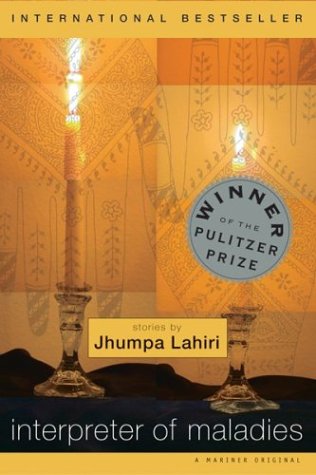
The half I wrote above
And the half I left to put here, below
...But I think that that’s really … always a part of me – the fact that I am very comfortable removing myself from actual experience.
It's not personal, Jon
You don't even know the woman
It's her books you fell for
Her short stories
Remember
I do
And soon
I'll return
She is that good
Jhumpa Lahumpa Lahiri
-Jhumpa Lahiri (in conversation with Charlie Rose)
I once had a crush on a writer named Jhumpa
[pronounced joom-pa]
Last name: Lahiri
For years now
In my mind's ears and my poor wife's
She was Jhumpa Lahumpa
That's how I thought of her, how I referred to her
I couldn't stop
If you don't know, this is ridiculous
The London born, Bengali-Indian author from America
Her stories are not silly
They're New Yorker literary
Jhumpa doesn't write for kids
That's not her style
Not Jhumpa Lahumpa
Ahem, Lahiri
Sorry
No, but seriously
At 33
For her first book
Jhumpa Lahumpa
Lahiri!
Won the Pulitzer
It's that name
I can't stop converting it to Willy Wonka creations
Jhumpa, Lahumpa, zoomtitty doo
This is unfair
She is a serious writer
I have an actual anecdote
Last year I flew to New York to meet her
Truth told, I was to meet many famous writers
The annual New Yorker Festival
She'd share the stage with two other American scribes
Also with unique names
T. Coraghessan Boyle
And, really, what're you gonna rhyme that with
And Jeffrey Eugenides
Which only ever made me think of Eugenics
Which brings up the Nazis
And there's nothing funny about that
(Unless Tarantino, Roberto Benigni or Mel Brooks are involved)
But Jhumpa
Lahumpa
She didn't have to be funny
Her tense, realist, powerful stories sure weren't
The three writers were on a stage in a converted old synagogue
Angel Orensanz was the venue's name
Someone famous probably
I didn't google him
Left him a Sephardic Jewish left fielder in my mind
Angel Orensanz
If he'd been any baseball good
Shit, if he'd ever gotten to wear the pinstripes
They'd have had to name a fizzy citrus drink after him
Angel Orensanz
Ksh
Glug glug glug
Ahhh!
It was a Friday night
Sabbath eve at the old synagogue
Not that anyone seemed to notice
The writers were speaking
Jhumpa who had been Lahumpa
on that stage
In Angel Orensanz's wooden cathedral of a synagogue
Eugenidies and Coraghessan on either side
Up there she became Lahiri La-lousy
She was so cold and closed
As if she were angry to be there
To share
Not just uncomfortable
Because believe me, I was ready to give sympathy
To Jhumpa who had been
Lahumpa
We all were
Lovers of her Interpretation of Maladies
But this woman was downright contrary
What flow the other two writers on stage produced
Lahiri cancelled out
Like a negative bug lamp
Zapping any good buzz in the room
The Shul
The Orensanz
She was awful
Anti-social
Discomforting
Unsettling
Disagreeable
Awful
I couldn't help myself
Going up after
Joining the line of the many who went up after
No photo request
No, no, I don't want you to sign my book
Just hear my appreciation
Know my thanks
For your big-brassy talent
For the depth of your soul-shuddering insights
To the lined up folks before me
Lahiri was glass-eyed cold
That stage awful
It was also personal
Things would be different for me
For us
She and I
I knew
I was wrong
It was not
She shook my hand
She did not smile
Those cold eyes
There was no Lahumpa to this Jhumpa
Crush crushed
Romance over
I'd no longer even like her
It was decided
But then I heard that quote
That soundbite I wrote above
The half I wrote above
And the half I left to put here, below
...But I think that that’s really … always a part of me – the fact that I am very comfortable removing myself from actual experience.
It's not personal, Jon
You don't even know the woman
It's her books you fell for
Her short stories
Remember
I do
And soon
I'll return
She is that good
Jhumpa Lahumpa Lahiri
Monday, September 21, 2009
Monday, October 6, 2008
The New Yorker Festival with Haruki Murakami
The following was posted on the New Yorker blog about the magazine's annual Festival. You may recognize the question asker from Canada with Japanese wife.
Somebody’s Got to Do It
[From: http://www.newyorker.com/online/blogs/festival/]
At the Haruki Murakami interview, there was a faint sense of siege. Tickets had sold out in eleven minutes. Up in the nosebleeds, people were pleading with an usher to let them sit on the stairs. (She was firm: “It’s against the law.”) On stage, the writer belied his rock-star reputation, glancing shyly at his feet. He began by telling the story of a jazzman who, when accused of playing “just like Charlie Parker,” handed his saxophone to his critic and said, “Here—you try playing like Charlie Parker.” He said that we should draw three conclusions from this:
1. Criticizing somebody is fun and easy.
2. Meanwhile, creating something original is very hard.
3. But somebody’s got to do it.
He went on to reveal his writing secrets:
On inspiration: “I became a writer all of a sudden. I don’t know why.”
On the three essentials to literature: “Reason. Harmony. Free improvisation.”
On momentum: “I wanted to turn the pages, but there were no pages—I had to write them. I don’t know what’s going to happen next, so I write it. And then I don’t know what’s going to happen next, so I write it.”
On happiness: “If the protagonist is happy, there’s no story at all.”
On the toughness required to be a writer: “You have to be Rocky.”
On writing in general: “It’s fun.”
An audience member rose. “I came all the way from Canada to hear you,” he said. “My wife is Japanese, and we met through talking about your work. She couldn’t come today, but she wanted to say ‘Konnichiwa.’”
A voice piped up from the other side of the room: “I came from Australia, so I beat you.”
And So he did. But speaking of beating, never in my life has my heart pounded so hard, and I was so nervous to have approached that mic in that theatre, so embarrassed that I'd taken up the time. I returned to my seat and absolutely uncharacteristically of me couldn't look at another person the rest of the event, and even when exiting, scurrying, wheeling my carry-on quickly out the theatre and down to 53rd street to catch a bus to get to Newark in time for my flight home, to see my beautiful wife, I felt pretty small. Small in the best way small, the way Murakami had made shy seem so good. Self-effacing as an ideal.
Still, as I got close to home, to my family, I thought: Have I got a story for you.
Somebody’s Got to Do It
[From: http://www.newyorker.com/online/blogs/festival/]
At the Haruki Murakami interview, there was a faint sense of siege. Tickets had sold out in eleven minutes. Up in the nosebleeds, people were pleading with an usher to let them sit on the stairs. (She was firm: “It’s against the law.”) On stage, the writer belied his rock-star reputation, glancing shyly at his feet. He began by telling the story of a jazzman who, when accused of playing “just like Charlie Parker,” handed his saxophone to his critic and said, “Here—you try playing like Charlie Parker.” He said that we should draw three conclusions from this:
1. Criticizing somebody is fun and easy.
2. Meanwhile, creating something original is very hard.
3. But somebody’s got to do it.
He went on to reveal his writing secrets:
On inspiration: “I became a writer all of a sudden. I don’t know why.”
On the three essentials to literature: “Reason. Harmony. Free improvisation.”
On momentum: “I wanted to turn the pages, but there were no pages—I had to write them. I don’t know what’s going to happen next, so I write it. And then I don’t know what’s going to happen next, so I write it.”
On happiness: “If the protagonist is happy, there’s no story at all.”
On the toughness required to be a writer: “You have to be Rocky.”
On writing in general: “It’s fun.”
An audience member rose. “I came all the way from Canada to hear you,” he said. “My wife is Japanese, and we met through talking about your work. She couldn’t come today, but she wanted to say ‘Konnichiwa.’”
A voice piped up from the other side of the room: “I came from Australia, so I beat you.”
And So he did. But speaking of beating, never in my life has my heart pounded so hard, and I was so nervous to have approached that mic in that theatre, so embarrassed that I'd taken up the time. I returned to my seat and absolutely uncharacteristically of me couldn't look at another person the rest of the event, and even when exiting, scurrying, wheeling my carry-on quickly out the theatre and down to 53rd street to catch a bus to get to Newark in time for my flight home, to see my beautiful wife, I felt pretty small. Small in the best way small, the way Murakami had made shy seem so good. Self-effacing as an ideal.
Still, as I got close to home, to my family, I thought: Have I got a story for you.
Subscribe to:
Posts (Atom)
