Showing posts with label J.D. Salinger. Show all posts

Wednesday, August 31, 2011

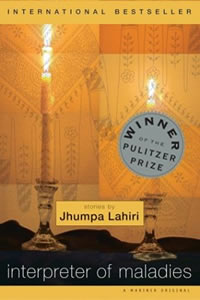
Before They Were Novelists: 3 Killer Short Story Collections

I don’t think anyone would argue with the fact that even a rather mediocre dental hygienist makes more money in a given year than most writers make in a decade. Generally it is only the best of the best, the luckiest of the luckiest, or the most connected of the most connected who can do so well as to make a living off of their craft. And that’s the novelists. In a modern world where the screen (phone, TV or computer) is so ubiquitous that your local barbershop is likely to have 40 or more flat inches on their wall to help you pass the time, it seems fair to say that most writers would struggle to pay their cell phone bills if they tried to earn a living by exclusively writing short stories.
The temptation then is to leap to the conclusion that the short story is dead. And yet the New Yorker as I’ve heard it, continues to pay short story legends like Alice Munro and William Trevor a special fee to have first access to any story those writers send out – that’s how valuable these works are. And when the magazine does select a work for publication, even a dental hygienist would envy the purchase price. Then you get Francis Ford Coppola, who in 1997 started a magazine devoted to short stories and design. Zoetrope: All Story is based on the great director’s love of fiction and his belief that so many great movies come on the backs of great short stories. This would seem to bode well for the form’s future. So too does the inclusion below of two writers who came to the English world’s attention over the last decade not from their novels, but on the back of their debut story collections.
Perhaps you are only familiar one, two or all three of the world-class writers listed below as novelists. If so, you might want to also consider their masterful work in the short form, where narrative and poetry so often collide, and where a twist ending shocks the heck out of you in the best way possible – that “Usual Suspects” like turn that you never saw coming but when it comes you say, Of course!


The rest of this article, like most all the others I'm writing these days, can be found at Indigo's Fiction Blog. 

Friday, July 15, 2011

Desert Island Novel to Read and Read Again # 2: J.D. Salinger's "The Catcher in the Rye" - Part I


HAPPY 60TH "THE CATCHER IN THE RYE"

[Originally published December 25, 2008]
[Click Haruki Murakami's "Norwegian Wood" for Desert Island Book to read and read and read #1]


The Catcher in the Rye made me feel less lonely at a time (15 years of age) when all I touched, as Salinger put it in one of his Nine Stories, seemed to turn to complete loneliness. It's the reason I started writing. It was the first work of fiction to break my heart as it healed my soul. And God Bless, because this Jew interested in Buddhism had found his truest religion.

THE INFATUATION
For the longest time I tried to keep my obsession with Salinger's only full-length novel to myself. Oh I would tell people I loved The Catcher in the Rye, or that Salinger was my favourite writer, but I honestly tried to not go further with it than that, to put a lid on it. I'd never have admitted that it wooed me to falling in love with New York forever, never mind the number of times I have read it, not including random flips for favourite passages. Or the fact that I somehow managed to write my Masters thesis on it, when my Masters was supposed to be in applied linguistics and what the hell did that have to do with English literature.

That first 15 year-old time was not for school, which may be the key to everything. I read it fast, just a few days and I was not (and am not) a fast reader. Holden Caufield's breezy first-person narration was so much like conversation you just zipped through. The book's famous opening:

If you really want to hear about it, the first thing you'll probably want to know is where I was born, and what my lousy childhood was like, and how my parents were occupied and all before they had me, and all that David Copperfield kind of crap, but I don't feel like going into it, if you want to know the truth. 

The book read so fast, so easy, so true I was convinced it was pure autobiography. Not even, cause autobiography still implies some semblance of putting together, of structure, work, effort. The Catcher in the Rye, to me, that first read, and the way it stayed in my mind long after (cause I wouldn't re-read it for at least five years, afraid of tainting that first read experience) was, I was sure, simply, if beautifully, Salinger writing his thoughts and experiences in a journal. The book was a particularly fascinating series of diary scribblings. This to me was profound because it felt like the true heart of a person, which has always captured me more than the mind, and the gimmicky tricks it can play (much as a twist ending is always exciting it's not the kind of thing that'll make it to my island).


WHAT LIES BEYOND POP IN MUSIC, AND HARRY POTTER IN FICTION

Digging through my big sister's records back when I was 12 (and big sisters had records to dig through) I discovered Pink Floyd, the song 'Comfortably Numb' in particular. It was a revelation - my first listen of something other than the bubble gum pop that really got me. I mean REALLY. This wasn't just music, this wasn't just wanting to hear Paula Adbul's latest hit for the umpteenth time cause it made you feel chipper or helped you not think about things; this was different, this was soul food, this was necessary - this made me think about things; shit, this was gonna bring me closer to God. Or, at the very least, help me get through grade seven, which as we all know is a crap age.

The Catcher in the Rye was not a story, not in the Narnia, Hardy Boys sense. It spoke the truth about things that I was living, that I was struggling with. The "Hardy Boys" was like Coca-cola, a treat I could have on weekends. The Catcher in the Rye, on the other hand, was water. I needed it.

HIS TRUTH
Holden spoke of things I'd never heard anyone say. He spoke the thoughts I had in my head. About the phoniness of people. About dishonesty and how hard life can be. And somehow, in travelling with him as he sneaks out one night to leave Pencey Prep forever (the school he is about to be kicked out of anyway) and trains it to New York, I felt less lonely. This kid was searching for something as I was, as so many kids do as they hit that age when they start to become aware of the world. And what I love is that the novel is as much about grand philosophies, on death, and what it means to live, and about losing the innocence of childhood, as it is about the simpler (or maybe more complicated) things. Like girls.

I was half in love with her by the time we sat down. That's the thing about girls. Every time they do something pretty, even if they're not much to look at, or even if they're sort of stupid, you fall half in love with them, and then you never know where the hell you are. Girls. Jesus Christ. They can drive you crazy. They really can.

Great art is about connection. At 15 I was sure I was Holden. At 23 it was Salinger I wanted to emulate most. The real point though is about what makes a book great, what makes something worth re-visiting. Holden, of course, says it better than I can:

What really knocks me out is a book, when you're all done reading it, you wished the author that wrote it was a terrific friend of yours and you could call him up on the phone whenever you felt like it.

This is the end of Part I.
[Click Salinger's The Catcher in the Rye Part II  for part II.]
[For Desert Island Book to read and read again # 3 click Arundhati Roy's The God of Small Things]


Thursday, April 14, 2011

Catcher in the Rye The Movie?


I didn't think so.
RIP JD.


Follow me on twitter; you'll love it; I swear.

Wednesday, February 9, 2011

New J.D. Salinger Biography 2011 - How Good Can It Be?

When the first biography of J.D. Salinger since his passing comes into print you'd hope for a lot of personal details, let's be honest. This is the world's most famous recluse we're talking about after all. And if you're interested enough in Salinger to want to pick up a memoir on the man, I expect you too would be hunting for the kind of what, where, why, how, details that Salinger kept wrapped up and secret all the 91 years he was alive.

Kenneth Slawenski's J.D. Salinger: A Life may not, I am afraid, be the biography a Salinger fan would want. Though some early reviews are positive, the fact of it is Slawenski, as mentioned in NPR's tepid review of the Salinger biography, had no access to the author himself or anyone in his literary circle.

Still even NPR's review isn't totally damning and acknowledges the "pearls" the book does occasionally offer. Truth be told I wouldn't be nearly so skeptical had I not happened upon the excerpt from J.D. Salinger: A Life in this month's Vanity Fair. Again, there are some interesting tidbits. For the budding writer, learning that one of your literary heroes actually wrote his one and only novel as a series of connected short stories is interesting. Helpful even. Especially as most writers start, like Salinger, by writing in the short form, and that the leap from short form to long for even as remarkably talented a writer as Salinger was still one hell of a leap is neat to read about. I should add, though, that for anyone intrigued enough about Salinger to have already read previous(ly frustratingly limited) bios of the writer or who simply googled him, this kind of information was basically already available. I had heard echoes of this about The Catcher in the Rye elsewhere.

The new book does, to be fair, elaborate some on Salinger's meeting Ernest Hemingway while in Europe at the end of the war.


Salinger was in Paris for only a few days, but they were the happiest days he would experience during the war...The high point was a meeting with Ernest Hemingway, who was a war correspondent for Collier’s. There was no question in Salinger’s mind where Hemingway would be found. He jumped into his jeep and made for the Ritz. Hemingway greeted Salinger like an old friend. He claimed to be familiar with his writing, and asked if he had any new stories on him. Salinger managed to locate a copy of The Saturday Evening Postcontaining “Last Day of the Last Furlough,” which had been published that summer. Hemingway read it and was impressed. The two men talked shop over drinks.
Salinger was relieved to find that Hemingway was not at all pretentious or overly macho, as he had feared he might be. Rather, he found him to be gentle and well grounded: overall, a “really good guy.” Salinger tended to separate Hemingway’s professional persona from his personal one. He told one friend that Hemingway was essentially kind by nature but had been posturing for so many years that it now came naturally to him. 

Sounds promising, no? In fact, on re-reading it, I think to myself: so what's the problem? Sounds like exactly the kind of detail a Salinger fan would fawn over. True. The problem was there really were but a few nuggets like this in all the pages excerpted, and you can bet the folks over at Vanity Fair were sure to find the meatiest bit of the book to take.

But I guess it was NPR's review that cemented it when they described Slawenski's prose as "wobbly" and that this is his first book. The fledgling biographer is in fact the guy behind the Salinger website Dead Caufields, a site I have thoroughly enjoyed, though more for the uncollected short stories it shared (that I had been unable to find elsewhere) than for the interpretation of the text.

On that note, because Slawenski had no access to the author or anyone close to him, even that "meatiest" excerpt from Vanity Fair winds up as literary analysis and critique, extrapolating assumptions of who Salinger the man was, based on what he wrote, which would be all well and interesting, except that's not what I want in a Salinger biography. What any of us want, no? Rather it is to find out how much Salinger was and was not like Holden Caufield and Seymour Glass, like any and all of his characters based on the things about his life that were not in his books.
This book will. I am sure, provide a little of that, but not, I fear, enough.

Friday, February 4, 2011

On the Anniversary of His Passing: Letter to J.D. Salinger (RIP)

[Best of PBIHT: this was first posted January 31, 2010, four days after Salinger's passing]

Dear J.D. Salinger,
I never wrote you a letter while you were alive. For obvious reasons I saw no point. Now that you're gone, though, this almost makes sense.

J.D., you are the reason I became a writer. The Catcher in the Rye changed the way I look at books. For many years it was the only book that mattered to me. I didn't realize there were Haruki Murakamis and John Steinbecks and other geniuses out there. Not till I was in my twenties did I discover that your other published works were equally phenomenal. But Catcher. I don't care that I'm not the only one. I don't care that I'm no longer 15 or 21. That book still puts me under its spell with its honesty and its passion, with its humor and its lasting power.

I have questions for my literary hero, of course I do. If I could've I'd have asked you why you were as private as you were, why you didn't publish more? Like anyone learning a craft, if I could have I'd have asked you about your process, the standard Paris Review questions, about your daily routine, about how much you revised a given story, how long it took to write a not so little short story like "De Daumier-Smith's Blue Period?" I like to think we could have shared a long coffee without an awkward silence, you and I, but that's probably a lot like thinking, as I stood in line waiting my turn at the end of a New Yorker festival talk a couple years ago, that it would be different when I went up to thank Jhumpa Lahiri, that she wouldn't be so cold and distant with me - ha! J.D., you probably just wanted peace and quiet. I hope you got as much as you needed. If not, I suspect you get your share now. (And I don't mean that facetiously.)

Thus instead of outlining any more selfish wishes of what I wish I could have gotten from meeting you, I'll instead tell you what you gave me:

Here, in Part II of My Letter to J.D. Salinger.

Best,
Jonathan

Friday, May 21, 2010

Great Short Story: J.D. Salinger's "A Perfect Day for Bananafish" I

The First of Salinger's Nine Stories 
[Introduced Here]

When perhaps the world's most famously reclusive writer died my father didn't write J.D. Salinger a letter. The Catcher in the Rye was not the reason my dad chose his profession (academia). And, as far as I know he has never read Raise High the Roof Beam, Carpenters and Seymour: An Introduction, never mind reading eight of the Nine Stories I'm here to speak about. But when you mention Salinger's name, my father always brings up "A Perfect Day for Bananafish" (1948), the story that opens Nine Stories.

My dad (Aba), it turns out, has good taste. This is probably the most famous short story ever published in The New Yorker. 

When Aba was just David and a teenager growing up in South Africa, a counselor at his (Habonim) sleepover camp read the famous story aloud to him and his fellow campers. I imagine the boys in their bunks on a humid night, clutched to the end of their beds' rusted metal frames, waiting to find out what happens next. Now a story, half of which is a phone conversation between a recently married bride and her mother wouldn't exactly seem a teenage boy's cup of tea. But then the best of anything is always so good as to break down the boundaries between man/woman, adult/child (think french fries, think a Van Gogh painting).

Inspired by this counselor's fireside idea, I read "A Perfect Day for Bananafish" aloud to a couple sets of friends when I was still living in Japan. (Said friends were not in bunk beds at the time). For perspective, in case you were picturing me regularly reading stories to strangers at my local Starbucks, the only other time I read aloud to people that aren't my wife, is when they are kids or when, more than a decade ago, I worked at a camp with autistic children (read them Charlie and the Chocolate Factory).

I've heard Salinger described as having a ventriloquist's ability - the way that he can inhabit the voice and nature of his characters. In "A Perfect Day for Bananafish" this includes: a little girl, a potentially mentally unstable man, a rather overbearing mother, and her rather superficial daughter. Each voice sounds right, sounds real. For the actor in me you can see why it would be a lot of fun to read aloud.

For the reader in you, Part II will, I hope, entice when you hear the sounds of those characters voices, and get a hint of the drive and depth of one hell of a brilliant yarn.

Click Salinger's "A Perfect Day for Bananafish Part II to continue reading.

Thursday, January 28, 2010

J.D. Salinger (1919 - 2010): His Words

I don't really deeply feel that anyone needs an airtight reason for quoting from the works of the writers he loves, but it's always nice, I'll grant you, if he has one.


CATCHER
What really knocks me out is a book that, when you're all done reading it, you wish the author that wrote it was a terrific friend of yours and you could call him up on the phone whenever you felt like it.

I live in New York, and I was thinking about the lagoon in Central Park, down near Central Park South. I was wondering if it would be frozen over when I got home, and if it was, where did the ducks go? I was wondering where the ducks went when the lagoon got all icy and frozen over. I wondered if some guy came in a truck and took them away to a zoo or something. Or if they just flew away.

It was that kind of a crazy afternoon, terrifically cold, and no sun out or anything, and you felt like you were disappearing every time you crossed a road.


HUMOR
I don’t know about bores. Maybe you shouldn’t feel too sorry
if you see some swell girl getting married to them. They don’t
hurt anybody most of them, and maybe they’re all terrific
whistlers or something. Who the hell knows? Not me.


I don't even like old cars. I'd rather have a goddam horse. A horse is at least human, for God's sake.

And I have one of those very loud, stupid laughs. I mean if I ever sat behind myself in a movie or something, I'd probably lean over and tell myself to please shut up.


GIRLS
I was about half in love with her by the time we sat down. That's the thing about girls. Every time they do something pretty... you fall half in love with them, and then you never know where the hell you are.


EGO
I'm sick of not having the courage to be an absolute nobody.

They didn't act like people and they didn't act like actors. It's hard to explain. They acted more like they knew they were celebrities and all. I mean they were good, but they were too good.


STAR
Keep me up till five because all your stars are out, and for no other reason…Oh dare to do it Buddy! Trust your heart. You’re a deserving craftsman. It would never betray you. Good night. I’m feeling very much over-excited now, and a little dramatic, but I think I’d give almost anything on earth to see you writing a something, an anything, a poem, a tree, that was really and truly after your own heart.
Follow mendelsohnjon on Twitter