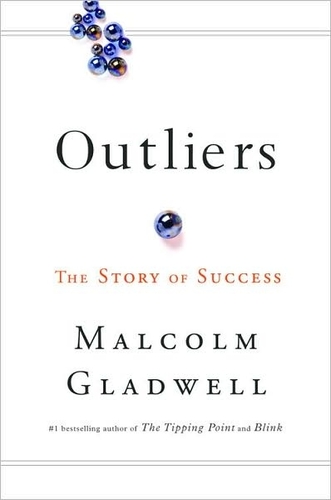
 - The Story of Success."
 One chapter in "Outliers" entitled 'The 10,000 Hour Rule' (equivalent to approximately 10 years) outlines a theory I've heard about and been obsessing over the last few years. It posits that to master any skill (be it chess, painting, tennis, what have you) requires 10,000 hours of practice. I love the theory because it dispels the genius myth. Picasso wasn't born a great painter. He didn't emerge from the womb a prodigy. He was so good so young because his father was an art teacher, and daddy had little Pablo painting everyday from the age of 3. Thus by 13, Picasso had mastered realistic drawing. Genius came later.
If it takes 10,000 hours to master a skill, this means that the essence of success is in hard work. Since most humans are, by nature, lazy, we (as individuals and as socialized parts of our societies) make choices, if we are so lucky, as to where we put those hours in - if we ever focus enough to do so.
After spending five years living in Osaka, Japan, I've come to see how attention to detail and a rigorous work ethic that isn't "above" doing any kind of mundane work equals the kind of quality control necessary to make not just excellent cars, home electronics and escalators that almost never break down, but chocolate, stationery and just about 10,000 other products that are far superior to the products produced in North America.
Japan inspired me. When you live there you work harder. And you really do start paying attention to the "little" things. This is how with half the population of the United States you become the second most powerful economy on earth. (For now, anyway.)
But Gladwell's explanation of the theory and my observations of what makes Japan successful makes me wonder. Not whether Asians outperform North Americans in math. 'Outliers' answers this. Yes, they do. Not will that young Japanese whipper-snapper build a better car? A better chocolate bar? Here too we know the answer is that yes, they probably, at least usually, do. What I wonder though, is is this person happier? Truly.
Because isn't the real question not just how to be successful, but why, and to what end?**
*This is clearly a bit out of date now. He has a newer book, "What the Dog Saw," a collection of 19 essays he has written for the New Yorker. If you aren't a reader of the magazine, but you are a fan of the man, this stuff (the stuff I've read anyway) is awesome. As is his talk (about spaghetti sauce) on TED.
**This topic - Gladwell's theory on what makes for success, but also to what end - has since become the subject of a lecture I've twice given to students at the University of Toronto.


