Wednesday, August 31, 2011

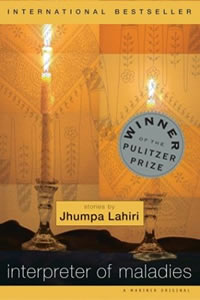
Before They Were Novelists: 3 Killer Short Story Collections

I don’t think anyone would argue with the fact that even a rather mediocre dental hygienist makes more money in a given year than most writers make in a decade. Generally it is only the best of the best, the luckiest of the luckiest, or the most connected of the most connected who can do so well as to make a living off of their craft. And that’s the novelists. In a modern world where the screen (phone, TV or computer) is so ubiquitous that your local barbershop is likely to have 40 or more flat inches on their wall to help you pass the time, it seems fair to say that most writers would struggle to pay their cell phone bills if they tried to earn a living by exclusively writing short stories.
The temptation then is to leap to the conclusion that the short story is dead. And yet the New Yorker as I’ve heard it, continues to pay short story legends like Alice Munro and William Trevor a special fee to have first access to any story those writers send out – that’s how valuable these works are. And when the magazine does select a work for publication, even a dental hygienist would envy the purchase price. Then you get Francis Ford Coppola, who in 1997 started a magazine devoted to short stories and design. Zoetrope: All Story is based on the great director’s love of fiction and his belief that so many great movies come on the backs of great short stories. This would seem to bode well for the form’s future. So too does the inclusion below of two writers who came to the English world’s attention over the last decade not from their novels, but on the back of their debut story collections.
Perhaps you are only familiar one, two or all three of the world-class writers listed below as novelists. If so, you might want to also consider their masterful work in the short form, where narrative and poetry so often collide, and where a twist ending shocks the heck out of you in the best way possible – that “Usual Suspects” like turn that you never saw coming but when it comes you say, Of course!


The rest of this article, like most all the others I'm writing these days, can be found at Indigo's Fiction Blog. 

Sunday, August 28, 2011

Tom Perrotta's "The Leftovers" - One of this Fall's Biggest Books


Stephen King is best known for his horror novels. Tom Perrotta is not. He doesn’t write horror novels. He writes literary fiction that specializes in the ennui and quiet tragedies of life in the modern American suburb, at least that’s what he had been writing until now. In 2004, for instance, The New York Times Book Review compared Perrotta with Chekhov.  I’m not under the impression that anyone has compared Stephen King’s work, powerful as it can be, to the rather challenging, high brow legend of the short story, Anton Chekhov. And yet it made perfect sense to me when I heard that it was King himself who had chosen to write the upcoming New York Times Book Review piece on The Leftovers a book I’ll not hold off a sentence longer from saying could be one of this year’s blockbusters.
Though I doubt anyone has previously compared Stephen King with Tom Perrotta, the two authors do share a kind of luck. Beyond having published work that sells rather well (or, in King’s case, extraordinarily well – 350 million books sold and counting), both seem to write stories that translate naturally to the screen, big and small. Two of Perrotta’s first five novels were made into films, both of which were Oscar nominated, the one a stark and penetrating melodrama about suburban life starring Kate Winslet (“Little Children”), the other a satire on politics and popularity that starred Reese Witherspoon and Matthew Broderick (“Election”), and that Perrotta himself helped adapt into a screenplay.
Now comes Perrotta’s latest novel.
Even before it has hit the shelves, Variety has reported that HBO, that juggernaut of cable television, is developing a series based on The Leftovers, a gripping tale that focuses on Mapleton, a rather picturesque American town dealing, or trying to deal, with the aftermath of a massive scale disaster. Millions upon millions of people around the world have suddenly disappeared – gone for good – in an event the book and the characters in it refer to as The Rapture. Had Stephen King written it, the book would probably have been called “The Rapture” and told a markedly different story, one that would likely have placed the Rapture itself as the climatic centre of the story...
Click Perrotta's Leftovers for the rest of this article.

Sunday, August 21, 2011

Tweet(le) Dee

As a kid I never understood why so many stories were about underdogs. I get it now. It's cuz they were written by writers.

Tuesday, August 16, 2011

A Novel This Full of Drunken, Gambling, Womanizing Debauchery Isn't Usually Called Literary


On the occasion of Charles Bukowski's birthday, a reposting:


CHARLES BUKOWSKI'S "POST OFFICE"


They don't do it anymore but not too many years back the big Indigo bookstore at Bay and Bloor in Toronto (a store I now know well) kept certain fiction titles, certain authors' novels, behind the Special Orders desk. Authors like William S. Burroughs, Haruki Murakami and Charles Bukowski were kept back there. You had to ask the staff to even look at them. Why? Because these were the titles most often stolen off the bookshelves. This should be reason enough for readers of a certain age and/or contrarian bent to be interested. It sure worked for a twenty year-old me. Still does on some level.


Charles Bukowski was a drunk. He was a gambler. He was a womanizer, but only when he got famous enough that he could get those women to womanize with. Think the dirtiest dive of a hole-in-the-wall bar you've ever seen. That's the kind of place you'd have found Charles Bukowski in and chances are you wouldn't have liked the man, and he would have been a right prick to you, and me too.

But then Hemingway was said to be the grand egocentric, anti-semitic prick of them all and I bloody love three of his novels to a reverent degree.

Bukowski too, he was one who could tranform himself on paper. Produce a little magic. Give a little something he probably couldn't be quite as generous with in his lived life.

He got famous as a poet, as a poet who would go to reading drunk and drink while he read. He got so famous for this that audience members liked to plow him with alcohol, get him truly wasted to up the perfomitivity of his reading.

But that's not why they came to hear his stuff.


There are books about wizards and there are books about vampires. Then there are the New Yorker friendly type of books that involve adultery and a certain middle-class unhappiness. There are books we call chick lit, there are the books that Ken Follett writes where good is good and bad is evil and it's all epic and historic and very well researched. Oh there are so many kinds of books but nowhere I can think of does Charles Bukowski squarely fit, least of all in any category that would have ever won him a Booker Prize. Salman Rushdie would not have been his best mate, believe me.

The closest to Bukowski I can think of would be a William S. Burroughs type or our current dark and dirty writer, Chuck Palaniuk, though I have to admit I've yet to read him.

Bukowski is writing the truths he knows and he does it beautifully. He writes about a class of people so low they can't, as I recently heard it put, be called blue collar since they have no collars to speak of. These are the people of the sketchiest parts of L.A., where Buk, as his fans and friends referrred to the writer, grew up. These are the drunks and the gamblers. These are the sorry souls with the crappy wives and the lousy cars. They are the lowlifes of a society that prizes getting ahead in your career by making more cash, where success is measured by the size of your house.

Bukowski is speaking for a very different group of people, a people far from what many of us know, and yet a middle-class Jewish boy from Canada can still relate. He can still read and relish and eat up so much of the truths he feels are his in Bukowski's work.

With Post Office, Bukowski's first novel, that I so enjoyed on re-reading (in a single day!) this past winter break (holed up in a bachelor apartment on 42nd avenue with my wife, no TV, no internet, no toaster oven, just a bad bad flu and a good good book) we get the story of Henry Chinaski, a not remotely disguised Bukowkian alter-ego, and his various crap jobs from the US Postal Service. What makes the story is the humor, the honesty, the drudgery, the sex, the drinking, the sex, the humor and the sex. Did I mention the sex? Bukowski gets down and dirty about the world, how he sees it, how it is. Morals are thrown out the window and the flank, as he calls it, of a woman's leg is in detail described. So too are the real crappy moments in our lives - our jobs! - and the terrible mundane way they can be, or how slavishly they can get us to work against a clock and how we sweat and puke to just keep up. And how hard that is.

He writes best about being screwed as the little guy, but then finding his little dirty ways to screw back, and I mean that every which way you imagined. And in every way the screwing is satisfying to read about, titilating, bloody revenge satisfying or just eye-ball popping wtf intriguing. Bukowski was destined to self-destruct but he did it with flare and he managed to laugh about it and he managed to even get some pretty poetic pathos out of it. But the crap jobs and then getting fired or quitting and then living off what he could win at the track, and then the women, oh the women. The fucking and the drinking, the flirting and the fighting. All of it full-tile, no holds barred. That's how he lived. That's how he wrote. There is no bullshit. There certainly aren't any aphorisms to be learned.

By now you see that  Post Office is not for everyone. I have yet to encounter a book club that would embrace it or anything else by Bukowski. If, however, you've ever wanted to steal a book, or stole one, or just give a grown-up finger to the Man, Buk (here reading his poem Bluebird) is for you.


[Originally published February 2011]

Monday, August 15, 2011

Cormac McCarthy's "Suttree"

Cormac McCarthy slays me. I was sure I hated when a writer used big words, and yet McCarthy, who has me reaching for my big red dictionary every other sentence, impresses the shit out of me with his lexicon. Why is that? Where normally that kind of big ten-dollar word when a five-cent word will do nonsense drives me up the wall? Part of it has to do with a writer's knowledge base of words. There's a big difference between the writer who keeps fondling their thesaurus in a constant effort to impress the reader, rather than the reader who:

a) seems to actually know about 100,000 more English words than I do; and 
b) is passionately engaged in word play, sincerely loving the language and have the nerdiest kind of poetry inducing fun with it. 

Friday, August 12, 2011

Counterculture Classics or Hipster Essentials?

Counterculture Classics or Hipster Essentials?


An Indigo Fiction Blogger’s Perspective.  
From authors as diverse as Jack Kerouac and Charles Bukowski to Martin Amis and William Burroughs, what the writers of these novels have in common is a counterculture quality. They are rebels. These authors certainly wrote great works that dared and continue to dare their, often young, readers to see the world in new ways. You would never say these fellows, men all, think outside of the box for when you live as far beyond that borderline we call normal as writers like Burroughs and Bukowski did, you don’t need to think outside of the box: you live there.
Jack Kerouac’s On The Road 
Legend has it that in a fit of inspiration, fuelled by the kind of illicit drugs that help one to stay up hours and days, Jack Kerouac sat down at his typewriter and did not get up until three weeks later, when he had churned out his masterpiece (indeed, in 2008, the Original Scroll uncut version was published, duplicating the format of Kerouac’s working version). Of this “feat,” Truman Capote (“Breakfast at Tiffany’s”) famously said with not a little bitterness: “That’s not writing, that’s typing.” Of course you need only delve in and experience On The Road so lovingly filled with the poetry of its rapid language and the brilliant characterizations—most notably of the story’s anti-hero Dean Moriarty—to realize how exaggerated that famous tale of the three weeks must be. In truth, Kerouac had been working on some form or other of this largely autobiographical narrative for years, though he did finally write a rapid version of the text, the result of which is the riffing, jazz-improvisational-like style that distinguishes On The Road and helped make it one of the 100 best novels in the English language, according to the Modern Library.  One can only wonder if the upcoming film version will please this title’s devoted fans; the director has his work cut out for him.
Click Hipster Counterculture Classicness to continue reading about Charles Bukowski and other legendary scribes, none of whom were hipsters in the obnoxious sense. 

Thursday, August 11, 2011

Fat Cats Celebrating as the Ship Goes Down

Thank you to this week's New Yorker. Says it all:


Tuesday, August 9, 2011

A Literary Map of Brooklyn


A Literary Map of Brooklyn


Be they harsh and harrowing or nostalgic and romantic (and sometimes both), this handful of the classic as well as some more recent works of fiction to come from or be about New York’s most famous borough includes stories most concerned, at their core, with characters poor, unhappy or both.  Interest, unsurprisingly, lies where there is struggle. As Tolstoy said, “Happiness is an allegory, unhappiness a story.”
Betty Smith’s A Tree Grows in Brooklyn (1943)
Like Pearl S. Buck’s classic A Good EarthA Tree Grows in Brooklyn is one of those timeless works that new generations of readers come to and love. It didn’t do badly in its day either, selling 300,000 copies in its first six weeks. Betty Smith’s beautifully rendered story, rich in the kind of traditional narrative pleasures you would associate with Steinbeck and maybe Dickens, is about an Irish family who have just moved to Williamsburg, Brooklyn at the beginning of the 20th century. Like so many immigrant stories, it is a story about struggle, about overcoming poverty and about finding your place in a new world. Perhaps this sounds old hat, but there is nothing tired when a story is filled this richly with characters like the wonderful protagonist, Francie, who works so hard to overcome her circumstances, a girl destined to become a writer. What’s so powerful is the degree to which we not only sympathize with Francie’s hard-working mother, who must basically run the household alone, but that we actually don’t hate and are in fact much intrigued, if totally infuriated by, Francie’s drunken but enchanting father, Johnny, the singing waiter who would never become the artist Francie seems destined to become.

ForBrooklyn books by Colm Toibin, Jennifer Egan, Jonathan Lethem and more click  Brooklyn Literary Map.

Sunday, August 7, 2011

BEST OF PBIHT: This Story is Hollywood Legend. It's Also True.

[Originally published April 2010]

It's the early '70s. He is just another struggling actor, poor as dirt, lucky as Job of the bible. He happens, however, to also be a budding writer and has spent the last three years writing a script.

It is a near miracle, then, when one of the major studios shows interest. They offer him $20,000 - the then minimum for scripts being bought.

Having spent the last seven years an otherwise total failure of a struggling actor, he is of course elated. They name Burt Reynolds and other famous stars as actors they want to play as the film's lead. The writer hesitates at this. He's an actor too. He explains he always imagined himself in the movie. Sorry, they say; that's impossible. You're nobody; nobody knows you.

They offer him $30,000. He still hesitates, explains he really wants to star in the movie. The offers start to climb. Now they're offering him $100,000. The writer-actor has $106 in the bank and not a penny more. He has a wife, a family. They say they want to give him $100,000 and for that money would consider trying to get Robert Redford to star. The writer-actor is impressed, excited, but conflicted. He's always wanted to act, that's why he wrote the script, wrote it with himself in mind as the lead.

The offers climb, finally topping $300,000. Adjust for inflation for, say, 1974 (Ie. a hell of a lot more than $300,000 which is still today a whopping wad of cash).

He needs to think about it. Goes home to the wife. Again $106 in the bank. Just the previous week he literally sold his dog he is so poor. Couldn't afford dog food. To say he needs the money bad is a massive understatement. And $300,000. It's a fortune.

He returns to the studio people the next day and, of course, refuses their offer.
It's a massive risk. They could as easily have told him to screw himself and scrapped the film altogether. But they didn't, they finally give in and agree to let him do the movie, to star in it. The deal is this:

They will only pay him $350 a week for the shoot, and of course they only pay him, Sylvester Gardenzio Stallone, the $20,000 studio minimum for the script.

The rest is of course history. Rocky [cue theme music] goes on to be nominated for nine Academy awards, wins three, including Best Picture for 1976. It is also that year's highest grossing film worldwide.


Adrian!

Wednesday, August 3, 2011

Canadian Men of Letters: The New Guard


The Final installment in my Canadian series of female and male writers, old and new.
Joseph Boyden, Rohinton Mistry and Rawi Hage could not be more different. A Scottish-Irish-Metis, a Bombay born fellow who lives in BramptonOntario and a Lebanese-Canadian who came to Montreal by way of Cyprus and New York City. These three men, from very different places, have very different tales to tell in markedly different styles. What they share are mantelpieces filled with prizes and the fact of being Canadian writers who have come into the international limelight over the last couple decades.
Joseph Boyden
Joseph Boyden has a couple of things going for him, not including the Rogers Writers’ Trust Fiction Prize he won for his first novel, Three Day Road, and the Giller prize he won in 2008 for his second, Through Black Spruce.  For one, the guy can write. The Washington Post described his prose as “raw poetry.” So he’s got the craft thing down. With a blue-eyed Catholic father who was a Canadian war hero and a Metis uncle who served in the First World War, the guy also has a variety of cultural and historical wells to draw from. What’s more, he’s clearly got a rich life of his own. When he was 16, he left his home in North YorkOntario to travel through the Southern US on his own and, for a time, became a roadie for a band. All these decades later, he now splits his time between (as he puts it) the Gulf of Mexico and the gulf of the Arctic (ie. Northern Ontario).
The story goes that Three Day Road was so well received that Penguin offered the fledgling novelist a six-figure, two-book deal. Boyden’s debut novel is inspired in part by his uncle’s experiences in World War I, and also on the lives of two legendary military snipers, Ojibwa Francis Pegahmagabow and John Shiwak, an Inuit. Set partly in Moose Factory,Ontario, the novel tells two stories. One is the narrative of Xavier bird, a Cree soldier and crack sniper, wounded physically and deeply scarred emotionally. He returns to Northern Ontario to his Aunt Niska. As his aunt attempts to heal her morphine addicted nephew, he recounts his experiences in the Great War. The second narrative is Aunt Niska’s, a Cree woman who has rejected a Canadian society determined to assimilate her. Instead she has fled for the bush, which is where she lives and takes her nephew Xavier to try and heal him.

Follow mendelsohnjon on Twitter