First her interview on Oprah now the one on CBC's Q - who knew that Roseanne Barr could make such a deep and wonderful interview subject? She is grounded, mature, grown-up. In the other words she's gone in the exact opposite direction of her country and (let's not BS ourselves Canada) ours.
I loved her show and I'm just as, if not far more impressed, with the woman she is now, who speaks with real integrity. Turns out there might just be a life after stardom. Turns out it might just be a whole hell of a lot better. Roseanne's Q interview is worth a listen to hear a woman who went through the eye of the fame storm and came out the other side glad to be over it, glad to be older and clearly so so so much wiser. If nothing else but for her offer to take Sarah Palin for a beer and straighten her out, it's definitely worth checking out.
As Jian and others have put it, we need a Roseanne on TV again.
[Totally cribbed this off CBC Q's website - kudos to them for finding it cause this is an all-time classic episode of 80s/90s sitcom TV (Remember when they actually made sitcoms that kicked aish?]
Friday, February 25, 2011


Thursday, February 24, 2011
Tuesday, February 22, 2011
Javier Bardem in "Biutiful"
So much difficulty, so much pain in the scenes between characters on screen
Yet so much beauty in the visuals of city between
And of course Javier Bardem whose open soul is there for all to see
To best represent darkness, to see its true depths you need some light
What makes this film so harrowing is the very humanity of its characters
There is no pure evil
There is hope

Films that portray darkness for its own sake, or worse still for the sake of manipulating the audience aren't the soul food I go to the arts for. For this reason I can't stand Lars Von Trier. Dancer in the Dark was a brilliant movie. A brilliant movie. It's also, to my mind, profoundly sadistic. It makes Black Swan seem tame in comparison. Speaking of, for all its brilliant craft and the best actor award Natalie Portman deserves to win, despite all that I didn't love Black Swan the way so many others did. But not because it wasn't brilliantly constructed. It was.
The artist is everywhere in their art. And who that artist is and what they stand for is as important to me as the work itself.
For this reason I love the books of Haruki Murakami, for the man's generosity, for his complexity and most of all for his humility. For this reason I love Javier Bardem and keep thinking about Biutiful.
This film is not being dark just to mess with the audience. It is not darkness for its own sake. The shocks and horrors aren't just sensational. They aren't just horror movie thrills. It's the humanity beneath the harrowing. It's the humanity despite the suffering.
For all these reasons I recommend Biutiful.
Yet so much beauty in the visuals of city between
And of course Javier Bardem whose open soul is there for all to see
To best represent darkness, to see its true depths you need some light
What makes this film so harrowing is the very humanity of its characters
There is no pure evil
There is hope
Films that portray darkness for its own sake, or worse still for the sake of manipulating the audience aren't the soul food I go to the arts for. For this reason I can't stand Lars Von Trier. Dancer in the Dark was a brilliant movie. A brilliant movie. It's also, to my mind, profoundly sadistic. It makes Black Swan seem tame in comparison. Speaking of, for all its brilliant craft and the best actor award Natalie Portman deserves to win, despite all that I didn't love Black Swan the way so many others did. But not because it wasn't brilliantly constructed. It was.
The artist is everywhere in their art. And who that artist is and what they stand for is as important to me as the work itself.
For this reason I love the books of Haruki Murakami, for the man's generosity, for his complexity and most of all for his humility. For this reason I love Javier Bardem and keep thinking about Biutiful.
This film is not being dark just to mess with the audience. It is not darkness for its own sake. The shocks and horrors aren't just sensational. They aren't just horror movie thrills. It's the humanity beneath the harrowing. It's the humanity despite the suffering.
For all these reasons I recommend Biutiful.
Friday, February 18, 2011
I have a crush on a Turkish author: Elif Shafak and the beautiful Ted talk she gives
"Come, let us be friends for once; let us make life easy on us; let us be lovers and loved ones; the earth shall be left to no one." -Sufi PoemIf you've ever hated being boxed in for your ethnicity, your colour, your gender, this TED talk by Turkish author, Elif Shafak, is beautiful and it is for you.
Thursday, February 17, 2011
Songs I'm Currently Sucking the Life Out Of
Do you suck the life out of your music?
I know you do. OK, I don't know that at all. I do, however, know that I do. And I do, big time! There are those songs, albums even, that I can't even listen to anymore I've so bled them dry. (Pink Floyd's "Shine On You Crazy Diamond" comes to mind.) Like rolling up that toothpaste tube so spiral tight you know there ain't an atom's worth of Crest coming out that thing.
I do the exact same thing with movies, with books, with burger shops. I revisit things. I am a revisiter. I have said this before here. I don't mean to bore. Only to explain. To entertain. To not be lame. What I want to say is that for those things I love I want to go back, again and again. What divides music from the other arts for me, though, is a matter of confidence.

Because I don't care if you're Roger Ebert or The New Yorker's movie reviewer Anthony Lane (who I thoroughly enjoy reading but rarely understand or even agree with). Heck, even my usually beloved A.O. Scott over at the NY Times sometimes gets it wrong (see Scott's glowing review of Somewhere, one of the biggest pieces of crap I saw last year). And I can say that about a NY Times movie reviewer, about him getting it wrong, cause that's how much I know what I like when it comes to things book and movie.
Like a good burger. I know what I like. I know that Creemore is my favourite beer. I know that Haruki Murakami
 is the world's best living writer. What I don't know about is music. Or rather, what I'm not so confident about. Like coffee. While I like to think I know a damned good cup of coffee when I have one (Toronto's L'Espresso for instance, or the coffee they serve at the breakfast buffet at the Ritz-Carlton in Osaka), I'm also rather partial to the franchise (ie.Tim's) stuff so long as it has plenty of cream and sugar.
I like cream and sugar. I like pop music is what I'm trying to say. That's the confession. Bands hate-hate-hated by the music magazine reading crowd are often beloved by me (eg. Counting Crows, Dave Matthews Band) or at least were and still hold important places of nostalgia. And isn't that 50%+ of what makes us love the music we love?
And you know, I just don't get it with Arcade Fire. They don't do it for me. I don't know why they won the Grammy. I am damned proud they are from Montreal, from Canada, but I they certainly don't get regular play on my iPod.
 With music I am rather simple. It took me three decades to even begin to understand Bob Dylan, Leonard Cohen and Neil Young. I can now truly say I have a passion for all three, a kind of love, a definite admiration. None of the three, however, have go-to songs on my minty green nano machine.
All this in defence of my less than sophisticated music choices. Also, just felt like sharing three songs that do get much play on my nano machine. Too much play.
So here, or rather there, on The Jukebox (left!) three songs I am currently sucking the life out of but haven't killed quite yet. Not sure they're all poppy exactly but there is pop in there for sure. Apologies to my legions of fans in Germany (a regular David Hasslehoff, I am) that the songs won't be available to you or anyone else outside of N. America. If curious I've listed the songs in the comments section below.
I know you do. OK, I don't know that at all. I do, however, know that I do. And I do, big time! There are those songs, albums even, that I can't even listen to anymore I've so bled them dry. (Pink Floyd's "Shine On You Crazy Diamond" comes to mind.) Like rolling up that toothpaste tube so spiral tight you know there ain't an atom's worth of Crest coming out that thing.
I do the exact same thing with movies, with books, with burger shops. I revisit things. I am a revisiter. I have said this before here. I don't mean to bore. Only to explain. To entertain. To not be lame. What I want to say is that for those things I love I want to go back, again and again. What divides music from the other arts for me, though, is a matter of confidence.
Because I don't care if you're Roger Ebert or The New Yorker's movie reviewer Anthony Lane (who I thoroughly enjoy reading but rarely understand or even agree with). Heck, even my usually beloved A.O. Scott over at the NY Times sometimes gets it wrong (see Scott's glowing review of Somewhere, one of the biggest pieces of crap I saw last year). And I can say that about a NY Times movie reviewer, about him getting it wrong, cause that's how much I know what I like when it comes to things book and movie.
Like a good burger. I know what I like. I know that Creemore is my favourite beer. I know that Haruki Murakami
I like cream and sugar. I like pop music is what I'm trying to say. That's the confession. Bands hate-hate-hated by the music magazine reading crowd are often beloved by me (eg. Counting Crows, Dave Matthews Band) or at least were and still hold important places of nostalgia. And isn't that 50%+ of what makes us love the music we love?
And you know, I just don't get it with Arcade Fire. They don't do it for me. I don't know why they won the Grammy. I am damned proud they are from Montreal, from Canada, but I they certainly don't get regular play on my iPod.
All this in defence of my less than sophisticated music choices. Also, just felt like sharing three songs that do get much play on my nano machine. Too much play.
So here, or rather there, on The Jukebox (left!) three songs I am currently sucking the life out of but haven't killed quite yet. Not sure they're all poppy exactly but there is pop in there for sure. Apologies to my legions of fans in Germany (a regular David Hasslehoff, I am) that the songs won't be available to you or anyone else outside of N. America. If curious I've listed the songs in the comments section below.
Monday, February 14, 2011
Lasso the Moon: A Cinephile's Top Ten Love Movie List
Yes, yes. Valentines shmalentines. But I've given in.
According to bestlovemovies.com (a good url for those aiming to climb the old google rankings), the best six are, in order: Titanic, The Notebook, Pearl Harbor, 50 First Dates, Pretty Woman and Twilight.
Need I even comment? Need I even cry, or possibly wretch, all over my computer screen? And I even enjoyed a couple of those titles. But The Notebook? Pearl Harbor? Why must love stories inspire such cheese? Now, to be fair, you can find a solid, if predictably rather dated love movie list according to the folks at AFI. The top ten in their long list of love movies don't, however, include a flick more recent than 1973. Yikes!
Thus my hopefully up-to-date but not cheese-ball list. Cause a great love story need not be a piece of crap movie.
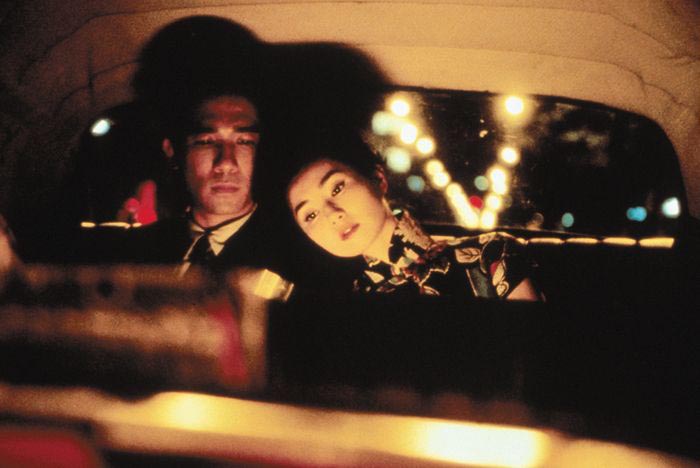
Note: these aren't necessarily comedies (in fact only three are), they certainly don't all have Cinderella endings and one of them is even usually described as a baseball movie (albeit one of the two best baseball movies ever).
Happy Hallmark Greeting Card holiday.
According to bestlovemovies.com (a good url for those aiming to climb the old google rankings), the best six are, in order: Titanic, The Notebook, Pearl Harbor, 50 First Dates, Pretty Woman and Twilight.
Need I even comment? Need I even cry, or possibly wretch, all over my computer screen? And I even enjoyed a couple of those titles. But The Notebook? Pearl Harbor? Why must love stories inspire such cheese? Now, to be fair, you can find a solid, if predictably rather dated love movie list according to the folks at AFI. The top ten in their long list of love movies don't, however, include a flick more recent than 1973. Yikes!
Thus my hopefully up-to-date but not cheese-ball list. Cause a great love story need not be a piece of crap movie.
Note: these aren't necessarily comedies (in fact only three are), they certainly don't all have Cinderella endings and one of them is even usually described as a baseball movie (albeit one of the two best baseball movies ever).
Happy Hallmark Greeting Card holiday.
My Top Ten Picks for Best Love Movie
1. It's a Wonderful Life
2. Eternal Sunshine of the Spotless Mind
3. In the Mood for Love
4. Never Let Me Go
5. High Fidelity
6. Breakfast at Tiffany's
7. Bull Durham
8. Casablanca
9. Sliding Doors
10. When Harry Met Sally
Friday, February 11, 2011
New On The Jukebox: Ben Folds

It's not a great voice. It's a bit nasally, whiny, actually. For that reason, for a long time I wasn't a Ben Folds fan. Then I came round and realized this guy makes amazing music, maybe even more now so then when he was with his other Four. Maybe not.
Wednesday, February 9, 2011
New J.D. Salinger Biography 2011 - How Good Can It Be?
When the first biography of J.D. Salinger since his passing comes into print you'd hope for a lot of personal details, let's be honest. This is the world's most famous recluse we're talking about after all.  And if you're interested enough in Salinger to want to pick up a memoir on the man, I expect you too would be hunting for the kind of what, where, why, how, details that Salinger kept wrapped up and secret all the 91 years he was alive.
Kenneth Slawenski's J.D. Salinger: A Life may not, I am afraid, be the biography a Salinger fan would want. Though some early reviews are positive, the fact of it is Slawenski, as mentioned in NPR's tepid review of the Salinger biography, had no access to the author himself or anyone in his literary circle.
Still even NPR's review isn't totally damning and acknowledges the "pearls" the book does occasionally offer. Truth be told I wouldn't be nearly so skeptical had I not happened upon the excerpt from J.D. Salinger: A Life in this month's Vanity Fair. Again, there are some interesting tidbits. For the budding writer, learning that one of your literary heroes actually wrote his one and only novel as a series of connected short stories is interesting. Helpful even. Especially as most writers start, like Salinger, by writing in the short form, and that the leap from short form to long for even as remarkably talented a writer as Salinger was still one hell of a leap is neat to read about. I should add, though, that for anyone intrigued enough about Salinger to have already read previous(ly frustratingly limited) bios of the writer or who simply googled him, this kind of information was basically already available. I had heard echoes of this about The Catcher in the Rye elsewhere.
The new book does, to be fair, elaborate some on Salinger's meeting Ernest Hemingway while in Europe at the end of the war.
Sounds promising, no? In fact, on re-reading it, I think to myself: so what's the problem? Sounds like exactly the kind of detail a Salinger fan would fawn over. True. The problem was there really were but a few nuggets like this in all the pages excerpted, and you can bet the folks over at Vanity Fair were sure to find the meatiest bit of the book to take.
But I guess it was NPR's review that cemented it when they described Slawenski's prose as "wobbly" and that this is his first book. The fledgling biographer is in fact the guy behind the Salinger website Dead Caufields, a site I have thoroughly enjoyed, though more for the uncollected short stories it shared (that I had been unable to find elsewhere) than for the interpretation of the text.
On that note, because Slawenski had no access to the author or anyone close to him, even that "meatiest" excerpt from Vanity Fair winds up as literary analysis and critique, extrapolating assumptions of who Salinger the man was, based on what he wrote, which would be all well and interesting, except that's not what I want in a Salinger biography. What any of us want, no? Rather it is to find out how much Salinger was and was not like Holden Caufield and Seymour Glass, like any and all of his characters based on the things about his life that were not in his books.
This book will. I am sure, provide a little of that, but not, I fear, enough.
And if you're interested enough in Salinger to want to pick up a memoir on the man, I expect you too would be hunting for the kind of what, where, why, how, details that Salinger kept wrapped up and secret all the 91 years he was alive.Kenneth Slawenski's J.D. Salinger: A Life may not, I am afraid, be the biography a Salinger fan would want. Though some early reviews are positive, the fact of it is Slawenski, as mentioned in NPR's tepid review of the Salinger biography, had no access to the author himself or anyone in his literary circle.
Still even NPR's review isn't totally damning and acknowledges the "pearls" the book does occasionally offer. Truth be told I wouldn't be nearly so skeptical had I not happened upon the excerpt from J.D. Salinger: A Life in this month's Vanity Fair. Again, there are some interesting tidbits. For the budding writer, learning that one of your literary heroes actually wrote his one and only novel as a series of connected short stories is interesting. Helpful even. Especially as most writers start, like Salinger, by writing in the short form, and that the leap from short form to long for even as remarkably talented a writer as Salinger was still one hell of a leap is neat to read about. I should add, though, that for anyone intrigued enough about Salinger to have already read previous(ly frustratingly limited) bios of the writer or who simply googled him, this kind of information was basically already available. I had heard echoes of this about The Catcher in the Rye elsewhere.
The new book does, to be fair, elaborate some on Salinger's meeting Ernest Hemingway while in Europe at the end of the war.
Salinger was in Paris for only a few days, but they were the happiest days he would experience during the war...The high point was a meeting with Ernest Hemingway, who was a war correspondent for Collier’s. There was no question in Salinger’s mind where Hemingway would be found. He jumped into his jeep and made for the Ritz. Hemingway greeted Salinger like an old friend. He claimed to be familiar with his writing, and asked if he had any new stories on him. Salinger managed to locate a copy of The Saturday Evening Postcontaining “Last Day of the Last Furlough,” which had been published that summer. Hemingway read it and was impressed. The two men talked shop over drinks.
Salinger was relieved to find that Hemingway was not at all pretentious or overly macho, as he had feared he might be. Rather, he found him to be gentle and well grounded: overall, a “really good guy.” Salinger tended to separate Hemingway’s professional persona from his personal one. He told one friend that Hemingway was essentially kind by nature but had been posturing for so many years that it now came naturally to him.
Sounds promising, no? In fact, on re-reading it, I think to myself: so what's the problem? Sounds like exactly the kind of detail a Salinger fan would fawn over. True. The problem was there really were but a few nuggets like this in all the pages excerpted, and you can bet the folks over at Vanity Fair were sure to find the meatiest bit of the book to take.
But I guess it was NPR's review that cemented it when they described Slawenski's prose as "wobbly" and that this is his first book. The fledgling biographer is in fact the guy behind the Salinger website Dead Caufields, a site I have thoroughly enjoyed, though more for the uncollected short stories it shared (that I had been unable to find elsewhere) than for the interpretation of the text.
On that note, because Slawenski had no access to the author or anyone close to him, even that "meatiest" excerpt from Vanity Fair winds up as literary analysis and critique, extrapolating assumptions of who Salinger the man was, based on what he wrote, which would be all well and interesting, except that's not what I want in a Salinger biography. What any of us want, no? Rather it is to find out how much Salinger was and was not like Holden Caufield and Seymour Glass, like any and all of his characters based on the things about his life that were not in his books.
This book will. I am sure, provide a little of that, but not, I fear, enough.
Tuesday, February 8, 2011
The Life, We Are Told, That Is Most Desirable
Hedonism and wealth are openly worshiped on shows such as The Hills, Gossip Girl, Sex and the City, My Super Sweet 16, and The Real Housewives of ... The American oligarchy, 1 percent of whom control more wealth than the bottom 90 percent combined, are the characters we envy and watch on television. They live and play in multi-million dollar beach homes and expansive lofts. They marry professional athletes and are chauffeured in stretch limos to spa appointments. They rush from fashion shows to movie premieres , flaunting their surgically enhanced , perfect bodies in haute couture.Their teenagers throw $200,000 parties and have $1 million dollar weddings. This life is held before us like a beacon . This life, we are told, is the most desirable, the most gratifying.
-Chris Hedges from Empire of Illusion: The End Literacy and the Triumph of Spectacle
Friday, February 4, 2011
On the Anniversary of His Passing: Letter to J.D. Salinger (RIP)
Dear J.D. Salinger,
I never wrote you a letter while you were alive. For obvious reasons I saw no point. Now that you're gone, though, this almost makes sense.
J.D., you are the reason I became a writer. The Catcher in the Rye changed the way I look at books. For many years it was the only book that mattered to me. I didn't realize there were Haruki Murakamis and John Steinbecks and other geniuses out there. Not till I was in my twenties did I discover that your other published works were equally phenomenal. But Catcher. I don't care that I'm not the only one. I don't care that I'm no longer 15 or 21. That book still puts me under its spell with its honesty and its passion, with its humor and its lasting power.
I have questions for my literary hero, of course I do. If I could've I'd have asked you why you were as private as you were, why you didn't publish more? Like anyone learning a craft, if I could have I'd have asked you about your process, the standard Paris Review questions, about your daily routine, about how much you revised a given story, how long it took to write a not so little short story like "De Daumier-Smith's Blue Period?" I like to think we could have shared a long coffee without an awkward silence, you and I, but that's probably a lot like thinking, as I stood in line waiting my turn at the end of a New Yorker festival talk a couple years ago, that it would be different when I went up to thank Jhumpa Lahiri, that she wouldn't be so cold and distant with me - ha! J.D., you probably just wanted peace and quiet. I hope you got as much as you needed. If not, I suspect you get your share now. (And I don't mean that facetiously.)
Thus instead of outlining any more selfish wishes of what I wish I could have gotten from meeting you, I'll instead tell you what you gave me:
Here, in Part II of My Letter to J.D. Salinger.
Best,
Jonathan
Subscribe to:
Posts (Atom)
